
Description
Product Overview
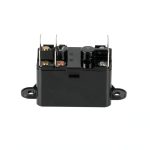
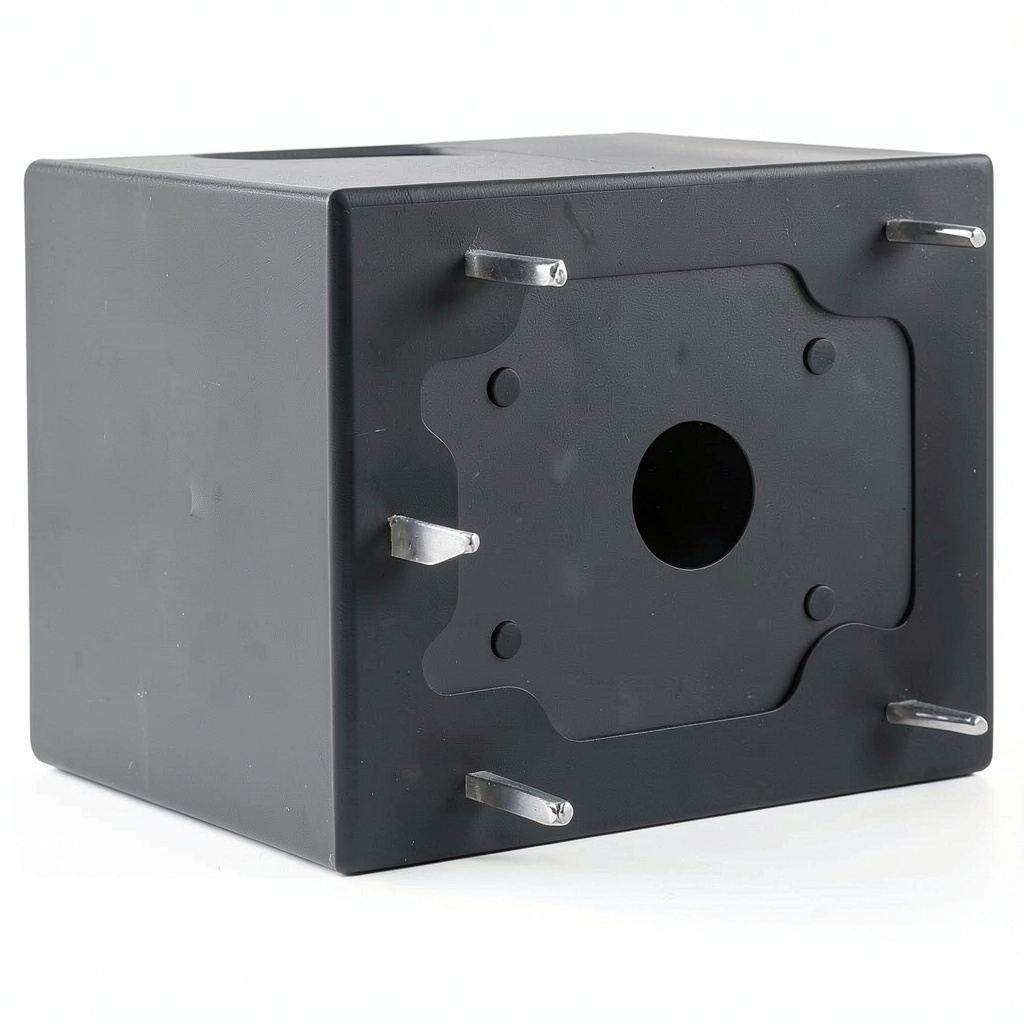
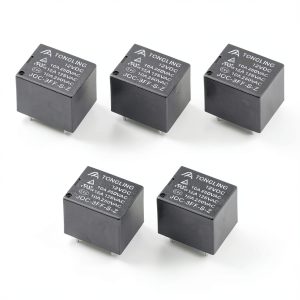
The JQC-3FF-S-Z sealed PCB power relay from RZ is engineered for high‑reliability applications where space, durability, and performance intersect. Featuring a compact 5‑pin Form C (SPDT) footprint, this relay integrates seamlessly onto control boards without the need for additional mounting hardware. The coil operates at 12 VDC with a nominal resistance of 400 Ω, drawing roughly 30 mA, which translates to low power consumption and minimal heat generation. Its contacts are crafted from a silver‑alloy material, delivering a low contact resistance and excellent conductivity for both resistive and inductive loads. Rated for 10 A at 250 VAC or 10 A at 24 VDC, the relay can handle a wide range of loads, from small fans and solenoids to larger heating elements, making it a versatile component for HVAC, appliance, and industrial control applications.
Beyond its electrical specifications, the JQC-3FF-S-Z boasts a sealed “S” construction that provides IP‑67 protection against dust, moisture, and flux ingress. This sealing ensures reliable operation in harsh environments, such as outdoor HVAC units, automotive under‑hood modules, and industrial machinery exposed to contaminants. The relay’s mechanical life is rated at 10 million operations, while its electrical life reaches 100 k cycles under typical load conditions, guaranteeing long‑term stability and reducing the need for frequent replacements.
Designed with a standard T73 footprint, the relay aligns perfectly with existing PCB layouts, simplifying redesigns and retrofits. Its pull‑in voltage is ≤9 V, and release voltage is ≥0.6 V, providing swift actuation and release characteristics that are essential for precise control in timing‑critical circuits. The dielectric strength of 750 Vrms between open contacts further enhances safety, allowing the device to withstand high voltage transients without breakdown.
Compatibility is a key strength of the JQC-3FF-S-Z series. While this specific model is optimized for 12 VDC coil operation, the family includes variants with coil voltages ranging from 5 V to 48 V, all sharing the same footprint. This flexibility enables designers to select the appropriate coil voltage for their driver circuitry while maintaining a consistent board design. The relay also pairs well with common driver components such as flyback diodes (e.g., 1N4007), transistor drivers (e.g., 2N2222), optocouplers (e.g., PC817), and RC snubber networks, ensuring robust protection against inductive kickback and extending component lifespan.
![[Product front view showing all components]](https://www.expectingco.store/wp-content/uploads/2026/07/38ae32f54b39416da7b509b4b8d505f0.jpg)
Usage
In HVAC systems, the JQC-3FF-S-Z serves as a pivotal switching element for fan motors, compressor start circuits, and heating element control. Its ability to handle 10 A at 250 VAC means it can directly drive typical residential and commercial HVAC loads without the need for external contactors, simplifying system architecture and reducing overall component count. The sealed design also protects the relay from the high humidity and temperature fluctuations commonly encountered in HVAC enclosures.
Appliance manufacturers leverage this relay for controlling washing machine agitators, dryer heating elements, and refrigerator compressors. The SPDT configuration allows a single relay to toggle between power and ground or between two distinct load paths, enabling sophisticated control schemes such as dual‑speed fan operation or alternating heating zones. The low coil current ensures that the control board’s power budget remains modest, which is especially important in battery‑powered or energy‑efficient designs.
DIY electronics enthusiasts and hobbyists find the JQC-3FF-S-Z an excellent choice for custom projects ranging from smart home lighting controllers to 3D printer extruder temperature regulation. Its straightforward solder‑on installation eliminates the need for socketed relay modules, and the clear pinout (common, normally open, normally closed, coil‑+, coil‑–) simplifies wiring diagrams. When paired with a microcontroller‑driven driver circuit, the relay can be commanded via PWM or digital I/O, providing precise timing and safety interlocks for experimental setups.
Industrial I/O modules benefit from the relay’s robust mechanical construction and high dielectric rating. In low‑voltage automotive electronics, the relay can switch auxiliary lights, pumps, and sensor power supplies, while the sealed enclosure guards against oil splatter and vibration. The relay’s fast response time (pull‑in ≤9 V, release ≥0.6 V) ensures that critical safety functions, such as emergency shut‑off circuits, activate promptly when required.
Why Choose Us
Choosing the JQC-3FF-S-Z from RZ means selecting a component that has undergone rigorous quality assurance testing. Each relay is batch‑tested for coil resistance, contact resistance, and dielectric strength, ensuring that every unit meets the specifications outlined in the datasheet. Our manufacturing process incorporates automated solder‑mask application and conformal coating to protect against moisture and corrosion, delivering a product that performs reliably even in the most demanding environments.
Our commitment to customer satisfaction extends beyond the product itself. We provide comprehensive technical documentation, including detailed pinout diagrams, recommended driver circuits, and application notes that guide engineers through proper implementation. Should you encounter any challenges during integration, our dedicated support team is available to troubleshoot and recommend optimal circuit configurations, ensuring a smooth development experience.
Reliability is further enhanced by the inclusion of a recommended flyback diode across the coil terminals, which suppresses voltage spikes generated when the relay de‑energizes. This simple addition protects both the relay and surrounding circuitry, extending the lifespan of the entire system. For applications requiring additional protection, we also suggest RC snubber networks or metal‑oxide varistors (MOVs) to mitigate inductive transients.
Environmental stewardship is a core value at RZ. Our relays are RoHS compliant, free from hazardous substances such as lead, mercury, and cadmium. The sealed construction reduces the need for frequent replacements, thereby minimizing electronic waste. By selecting our relay, you contribute to a more sustainable supply chain while benefiting from top‑tier performance.
Key Features
- Compact 5‑pin Form C (SPDT) footprint fits tight PCB spaces, simplifying board layout.
- Sealed “S” construction with IP‑67 rating protects against dust, moisture, and flux, ensuring reliable operation in harsh environments.
- Silver‑alloy contacts provide low resistance and high conductivity for both resistive and inductive loads.
- Rated for 10 A at 250 VAC or 24 VDC, covering a wide range of HVAC, appliance, and DIY applications.
- Dedicated technical support and detailed application notes help you integrate the relay quickly and confidently.
FAQ
What is the difference between SPDT and DPDT relays?
SPDT (Single Pole Double Throw) relays have one common terminal that can connect to either a normally open or a normally closed contact, allowing you to switch a single circuit between two states. DPDT (Double Pole Double Throw) relays have two independent switching circuits, enabling control of two separate loads simultaneously.
Can I use this relay with a 5 V coil driver?
No. The JQC-3FF-S-Z model is designed for a 12 VDC coil. Using a 5 V driver would not provide sufficient voltage to reliably actuate the relay. However, the JQC‑3FF family includes variants with 5 V, 9 V, 18 V, 24 V, and 48 V coils that share the same footprint.
Do I need a flyback diode across the coil?
Yes, a flyback diode such as a 1N4007 or FR107 should be placed across the coil terminals (cathode to the positive side) to suppress voltage spikes when the relay is turned off. This protects both the relay and the driving circuitry from inductive kickback.
Is the relay suitable for switching inductive loads like motors?
The relay can switch inductive loads up to its rated current, but it is recommended to add a snubber circuit or MOV across the contacts to absorb voltage transients generated by motor back‑EMF, ensuring longer contact life.
What is the expected lifespan of this relay under normal operation?
Under typical conditions (30 operations per minute), the relay is rated for 100 k electrical cycles and 10 million mechanical cycles, providing many years of reliable service in most applications.
Reviews
There are no reviews yet.